
San Mateo Roofing Field Guide
A San Mateo reroof can be express. The roof decides whether the scope stays simple.
San Mateo publishes a real express reroof lane, but “express” is an intake decision, not a roof specification. The useful work happens before filing: find the leak pattern, expose likely scope risks, separate opening or equipment changes, and write the drainage and flashing details the roof actually needs.
That is especially important on bay-side properties where marine-layer dampness, shaded roof areas, and storm rain can keep weak transitions in play. The local thesis is practical: scope discovery protects both the permit lane and the roof assembly.
Municipal and technical sources checked . The issued permit, current City guidance, and selected manufacturer's instructions control the project.
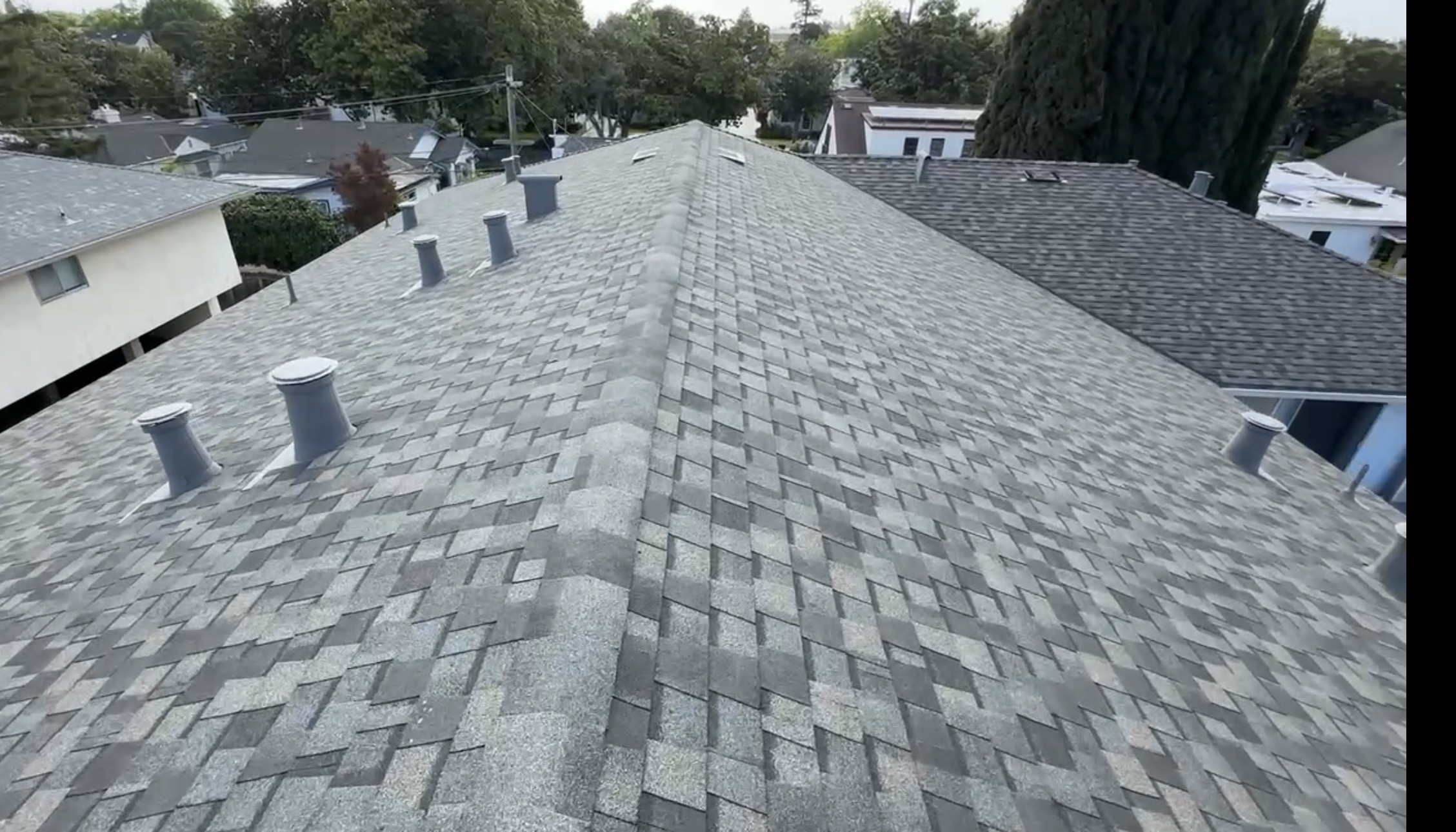
Permit routing
Choose the lane from the complete roof scope
The City's Express Building Permits pagepublishes two narrow facts: reroof is on the express list, and express work does not require plan review or construction drawings. It does not publish a reroof worksheet that turns every related scope item into an automatic yes or no.
City-published lane
Express reroof
San Mateo lists reroof as an express permit type. The City defines express work as work that does not require plan review or construction drawings.
Contractor decision: Use this as the starting assumption only when the roof geometry, openings, structure, material assembly, and rooftop scope are staying simple.
Reviewed minor work
OTC or virtual OTC review
This is not the express lane. The City's November 2025 eligibility sheet says every minor project on its list needs plans and applicable specifications.
Contractor decision: New-size or new-location skylights appear in this reviewed lane. A same-opening replacement is not answered clearly enough to promise a route online.
Expanded project
Full review
The City identifies enforcement cases, stop-work notices, active planning applications, zoning or right-of-way impacts, several recent permits, and longer reviews as full-review conditions.
Contractor decision: Structural change or a mixed roofing/mechanical project should be scoped before anyone quotes an express timeline.
What is published, and what still needs City confirmation?
Published by San Mateo
- Reroof appears on the express permit list.
- Express means no plan check and no construction drawings.
- New-size or new-location skylights appear in the reviewed minor-project sheet.
- Roof sheathing repair is identified separately as over-the-counter work.
- Inspections remain part of permitted construction.
Confirm for the actual address and scope
- Same-opening skylight replacement and sun-tunnel treatment.
- Incidental versus planned deck or sheathing replacement.
- Material changes that affect load, attachment, classification, or energy documents.
- Whether rooftop equipment stays separate from the reroof record.
- The inspection sequence printed on the issued permit and job card.
Field boundary
Express does not mean inspection-free
San Mateo's inspection page says permitted work is checked against codes and the approved permit. The City's FAQ describes a roof-nail inspection when roofing deck is installed and a final inspection after work is complete. The job card controls which inspections apply to a particular reroof.
Scope threshold
Repair the failure, or reset the roof system?
Roof age is context, not the verdict. A useful recommendation ties the observed failure to the remaining field, the available tie-in, hidden-condition risk, and the number of details that must be rebuilt.
Repair is defensible when
The problem is isolated and the tie-in can last
- The leak can be traced to one flashing, penetration, skylight, valley, or edge detail.
- The surrounding roof field is serviceable and compatible with a durable repair.
- Deck damage appears limited enough to expose, document, and repair locally.
- A repair will not create a patchwork of incompatible materials or short tie-in lengths.
Compare reroofing when
The failure belongs to the assembly, not one detail
- Leaks or failed details occur in multiple roof areas.
- The covering, underlayment, flashings, or fasteners show system-wide wear.
- Previous patches keep moving the leak instead of ending it.
- Widespread deck damage, a material conversion, or several opening changes are likely.
Honest qualification: an exterior inspection cannot prove every deck or underlayment condition. A written scope should state what was visible, what remains concealed, and how unit-price or change-order authorization will work if tear-off exposes damage.
Bay-side exposure
Follow water from the upper roof to the ground
NOAA explains that the West Coast marine layer can persist and extend inland with fog. San Mateo's own adopted-code page publishes Climate Zone 3, an 85 mph basic wind speed (3-second gust), and roof-drain design at a minimum two inches of rainfall per hour. Those are design inputs, not a prediction that every property sees the same exposure.
The job-level decision is simpler: document where water changes direction, where damp areas dry slowly, and where an upper roof, wall, skylight, curb, or gutter concentrates flow onto another assembly.
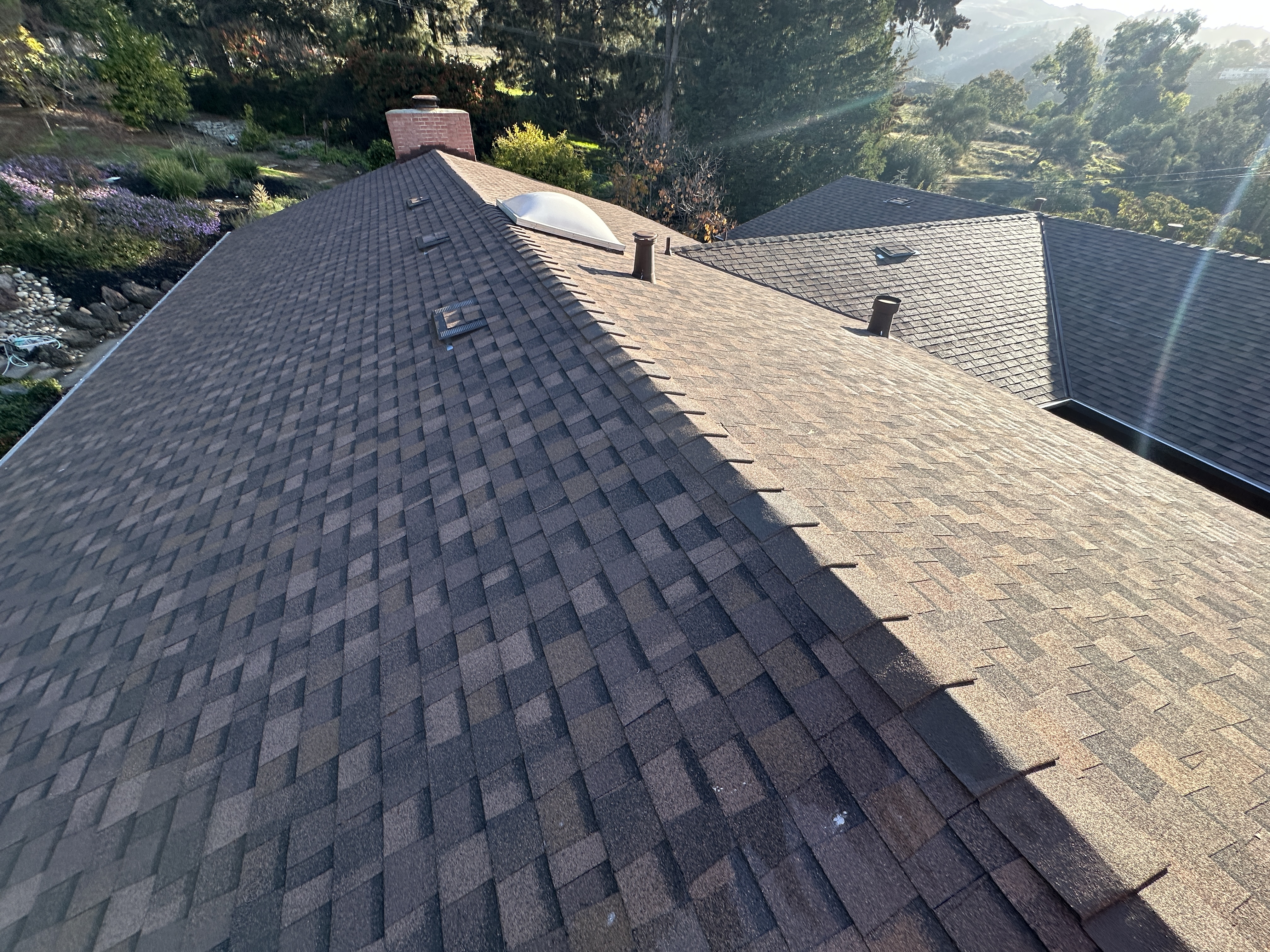
Roof-to-wall linesCan the wall flashing be rebuilt in the right sequence?
Look for short step flashing, face-nailed metal, sealant-only repairs, blocked kick-outs, siding clearance, and upper-roof runoff concentrated onto a lower wall line.
Skylights and penetrationsIs the opening staying, moving, or changing size?
Record the mount type, opening dimensions, roof pitch, roofing material, curb condition, and matching flashing system before ordering. A new or changed opening is also a permit-routing question.
Edges, gutters, and fasciaWhere does water go when the gutter is full?
Check drip-edge continuity, starter course, fascia condition, valley discharge, gutter pitch, overflow evidence, and whether runoff is being pushed behind the gutter or onto a lower roof.
Valleys, drains, and low pointsDoes the assembly drain without relying on caulk?
Map debris lines, staining, ponding, open seams, undersized drainage paths, scuppers, overflow provisions, and transitions between steep- and low-slope roof areas.
Slope + assembly
Material decisions start with pitch, water path, and building use
A product name is not a complete scope. The roof covering, underlayment or membrane, deck, insulation, flashings, drains, curbs, and penetrations have to work as one assembly and match the permit description.
Steep slope
Asphalt shingles
Measure pitch before selecting the underlayment and flashing package. Near the low-slope boundary, manufacturer instructions can require additional underlayment coverage; the written scope should name the selected system instead of saying only “30-pound felt” or “ice and water.”
Scope hold: Do not finalize the scope until valleys, roof-to-wall lines, eaves, penetrations, ventilation, and any mixed-slope tie-ins are documented.
Review shingle systemsSteep slope / assembly-sensitive
Concrete or clay tile
Tile is the water-shedding surface, not the whole waterproofing plan. The current TRI installation manual treats tile below 3:12 as decorative over an approved membrane and adds underlayment requirements from 3:12 to under 4:12.
Scope hold: A conversion to tile needs load, deck, attachment, underlayment, eave closure, drainage, and permit-route confirmation before material is ordered.
Review tile systemsLow slope / commercial or mixed roof
Membrane roofing
A low-slope scope starts with the existing assembly and water path: deck, insulation, vapor behavior, seams, terminations, drains, overflow, curbs, equipment, and penetrations. It should not be treated as a scaled-up shingle repair.
Scope hold: Confirm whether wet insulation, trapped moisture, ponding, equipment work, or energy-code documentation makes a recover or coating unsuitable.
Review TPO and PVC systemsResidential
Simple geometry can preserve a simple filing
A like-for-like steep-slope reroof with stable openings and no known structural program is the clearest express candidate. Mixed slopes, tile conversions, skylight changes, solar coordination, or broad deck work should be separated before filing.
Commercial + multifamily
Use, equipment, drains, and energy documents expand the checklist
San Mateo's online center separates residential and commercial applications. On low-slope and occupied buildings, confirm rooftop units, curbs, drains and overflow, insulation or energy alterations, access, tenant sequencing, and any fire or planning review instead of assuming the residential express story transfers.
Commercial roofing support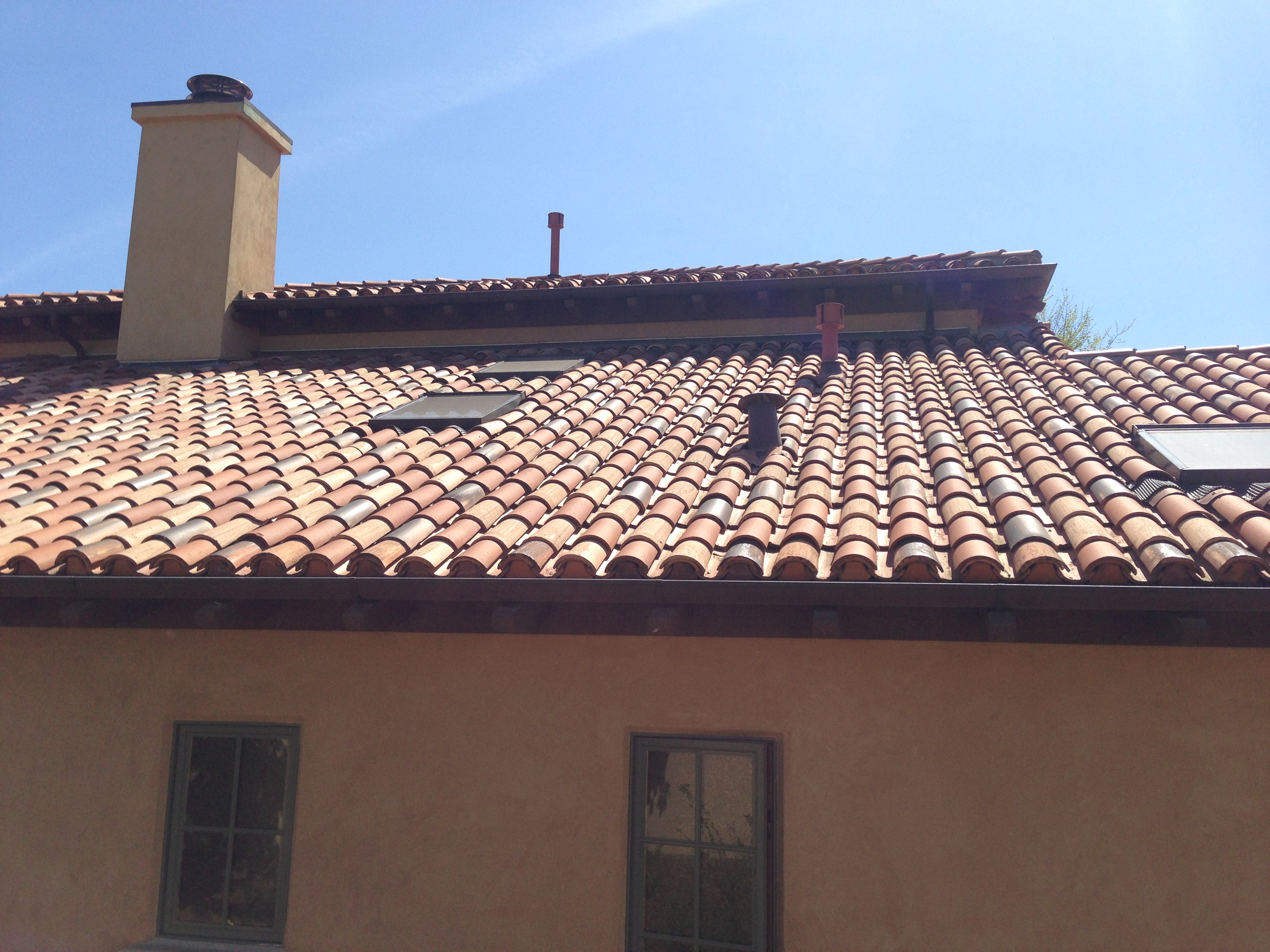
Local difference
Do not copy a neighboring city's reroof process
San Mateo is not “generic Peninsula.” Its published express definition, reviewed-minor lane, inspections, current design criteria, and code amendments create the actual boundary.
San Mateo
The City publishes reroof as an express permit type, but express means no plan check and no construction drawings only when the work does not need them. Inspections and permit conditions still control the field sequence.
San Mateo express permitsOakland
Oakland publishes a re-roofing certificate process with self-certified closeout and no required inspection after the work. That certificate model should not be copied into a San Mateo scope.
Oakland certificate processNewark
Newark lists re-roofing among residential permits that may not require plans, but it is still Newark's permit workflow. San Mateo's express, reviewed-minor, and full-review distinctions remain their own routing decision.
Newark permit guidanceHotter inland cities
Do not import an inland city's heat or cool-roof shorthand. San Mateo currently publishes Climate Zone 3; Energy Code requirements still depend on building use, roof slope, assembly, altered area, and the code in effect for the permit.
CEC climate-zone toolBefore pricing + filing
A roof-scope sheet that prevents permit surprises
This is the handoff between inspection, estimating, permit intake, and production. Complete it before materials are ordered or an express timeline is promised.
- Map every roof area and record pitch, covering, and visible number of layers.
- Label each leak as isolated, repeated, or system-wide; do not decide by roof age alone.
- Inventory skylights and sun tunnels as same-opening, new, moved, or resized.
- Flag soft deck, edge swelling, dry rot, prior overlays, and known sheathing repairs.
- Identify framing, pitch, opening, or load changes separately from covering replacement.
- List every rooftop unit, curb, vent, pipe, conduit, and solar coordination item.
- Trace valleys, drains, scuppers, gutters, overflow marks, and discharge onto lower roofs.
- State whether the building is residential, multifamily, or commercial before choosing an application.
- Confirm material classification, current code cycle, C&D paperwork, and inspections before ordering.
Code-cycle, roof-classification, and C&D checks
Current published code facts
San Mateo says the 2025 California codes took effect January 1, 2026. Municipal Code §23.08.100 currently publishes a minimum Class B roof-covering table. Classification belongs to the tested assembly, so verify the selected product and assembly rather than relying on a marketing label.
Administrative uncertainty to resolve
The City's C&D page says certain permits require a recycling/waste plan and deposit. Its FAQ says 65% of nonhazardous C&D waste, while municipal-code categories publish different percentages for covered projects. Ask which current form, deposit, category, and target apply to this permit.
San Mateo roofing questions
Does San Mateo have an express reroof permit?
Yes. The City lists reroof as an express permit type and defines express as no plan check and no construction drawings when the work does not require them. The City does not publish one universal checklist that makes every reroof express.
Does express mean there are no roofing inspections?
No. Express describes permit issuance, not a waiver of field oversight. San Mateo publishes inspection procedures, and its FAQ describes roof-nail and final inspections in applicable work. The issued permit and job card determine the required sequence.
Will a skylight force a reviewed permit?
A new-size or new-location skylight is listed in the City's reviewed minor-project guidance, and the permit FAQ says skylights require plans. The published material does not clearly resolve every same-opening replacement, so confirm that condition before filing.
Can hidden sheathing damage be handled after tear-off?
It may be possible, but do not promise the permit route or schedule before the likely deck condition is discussed. The City separately identifies roof sheathing repair as over-the-counter work and describes a roof-nail inspection when deck is installed.
When is repair more sensible than reroofing?
Repair is defensible when the failure is isolated, the surrounding field is serviceable, the tie-in can be rebuilt correctly, and deck damage is limited. Multiple failures, widespread wear, recurring patches, or broad deck damage usually make reroof comparison more honest.
Are residential and commercial reroofs filed the same way?
Do not assume so. The online permit center separates residential and commercial building applications. Commercial and multifamily work can add energy documentation, rooftop equipment, drains, access, tenant, and fire or planning coordination.
Which code cycle and waste-diversion rule applies?
San Mateo says the 2025 California codes took effect January 1, 2026, but the permit date and project history still matter. The City's C&D page says certain permits need a waste plan and deposit; published percentage language varies by source and project category, so confirm the current requirement for the permit.
Sources + boundaries
Primary references behind this guide
These links support the municipal, climate, and technical statements above. They do not replace address-specific confirmation, product evaluation reports, engineered design, the issued permit, or manufacturer instructions for the selected assembly.
Municipal sources
- City of San Mateo — Express Building Permits
- City of San Mateo — Online Permit Center
- City of San Mateo — OTC/VOTC eligibility, revised November 14, 2025
- City of San Mateo — Building Inspections
- City of San Mateo — Building permit and inspection FAQ
- City of San Mateo — Adopted Building Codes and design criteria
- San Mateo Municipal Code §23.08.100 — roofing classification
- City of San Mateo — Construction and Demolition
Climate and technical sources
Need a San Mateo scope before the permit description is locked?
Winter Roofing can document the leak pattern, roof areas, openings, deck risks, drainage, and rooftop coordination so repair, reroof, and permit decisions start from the same field facts.