Roofing decisions here connect summer heat, the City's Climate Zone 4 and Exposure C design criteria, address-level fire-zone checks, foothill and open-space conditions, and a residential reroof process that ends with a roof final. Winter Roofing helps owners turn those local facts into a practical repair, replacement, drainage, inspection, or maintenance scope.
2025 code cycleClimate Zone 4Wind Exposure CAddress-level FHSZ checkResidential reroof final required
Morgan Hill publishes a dedicated residential reroof process. The filing lane changes with the applicant, and issuance is not the finish line: the City requires a roof final inspection.
Requirements and links checked . Confirm the job-specific inspection card and any permit conditions issued for the address.
Contractor-performed reroof
Morgan Hill says the contractor should obtain the reroof permit. The contractor signing for it must show a current C-39 contractor license, workers' compensation insurance, and a current City business license.
If the owner of the company holding the contractor license is not signing, the City's application page calls for a letter authorizing an employee or agent to sign.
Owner-builder reroof
An owner pulling the permit accepts responsibility for code compliance and must complete the City's Notice to Property Owner and Owner's Acknowledgement before issuance.
The City asks an owner-installer to know the roof squares, material, expected product life, and sheathing thickness.
1
Confirm the authority and scope
Verify that the property is inside Morgan Hill city limits. Unincorporated addresses use Santa Clara County's process. Identify reroof, repair, skylight, structural, solar, and drainage work before filing.
2
Use the filing lane that matches the applicant
The City limits online reroof applications in eTRAKiT to contractor-applied residential permits. Other permits are submitted as PDFs to permits@morganhill.ca.gov; the City does not accept photos or JPEGs as plan documents.
3
Settle the sheathing closeout path
The City's Roof Sheathing Compliance Form may be used in lieu of a sheathing inspection. A final will not be approved without either that form or a completed sheathing inspection, so confirm the permit-specific path before work is covered.
4
Schedule and close the roof final
Morgan Hill requires a roof final inspection, scheduled through eTRAKiT. Its reroof page lists sheathing and smoke/CO documentation at final. The currently linked fee schedule, effective December 23, 2024, separately calls for roof and sheathing forms on tile roofs and flags carbon monoxide detectors above $1,000 valuation. Follow the issued permit checklist.
Information to settle before filing
Confirm whether the address is inside the City of Morgan Hill or in unincorporated Santa Clara County.
Record roof area in squares, material, expected product life, sheathing thickness, and visible sheathing condition.
Separate repair, alteration, reroof, skylight, structural, solar, and drainage work so the filing matches the real scope.
Check the address on the City's 2025 Fire Hazard Severity Zone map and confirm whether Class A roofing applies.
Treat replacement of 50% or more of the roof area as the cool-roof screening trigger, then confirm exceptions and the compliance path.
Separate steep-slope and low-slope roof portions so each assembly is planned under the correct criteria.
Keep the permit record, inspection path, and required closeout forms with the job file.
Use eTRAKiT for eligible contractor-applied residential reroofs and inspection scheduling. The City directs other permit applications and PDF plans to permits@morganhill.ca.gov.
What makes Morgan Hill roofing different?
Morgan Hill spans several property patterns. A downtown low-slope roof, a Jackson Oaks or Holiday Lake home, a westside larger lot, and a Southeast Quadrant ag-edge property can need different access, drainage, debris, and roof-transition checks even when the service category sounds the same.
East Dunne, Holiday Lake, and Jackson Oaks
Foothill and open-space-adjacent homes can bring slope, vegetation, access, valley debris, and an address-level Fire Hazard Severity Zone check into the roofing conversation before materials are selected.
Westside, Llagas, Sunnyside, and Santa Teresa edges
Where a larger lot borders open space, review roof edges, valleys, gutters, and downspouts for the wind and leaf, seed-pod, dust, or seasonal-debris conditions actually present.
Downtown, Monterey Road, and Cochrane corridors
If a commercial or mixed-use roof is low-slope, start with drainage: membranes, scuppers, roof drains, parapets, rooftop equipment, and clear reporting for the owner or tenants.
Southeast Quadrant and agricultural edges
Where a property sits at an agricultural or open-space edge, review roof access, gutters, valleys, sediment, and downspout discharge under the property's observed conditions before the first serious rain.
Infill and suburban subdivisions
On a composition-shingle home, document skylights, attic ventilation, roof-to-wall transitions, gutter backup, and repair history before deciding whether the scope is still localized.
Climate Zone 4, Exposure C, fire-zone, and mixed-slope planning
Morgan Hill's published design criterialist Climate Zone 4, Wind Exposure C, Seismic Design Category D, and a 92 mph Risk Category II design wind speed. Those published baselines help frame energy review, material selection, fastening, edge detailing, and the questions that need site-specific confirmation.
Summer heat, Climate Zone 4, and cool-roof planning
A 2025 City report lists average summer highs in the 90s. Morgan Hill is Climate Zone 4, and permits applied for on or after January 1, 2026 use the 2025 Energy Code. CEC's revised May 2026 instructions say roofing requirements trigger when 50% or more of the roof is replaced; confirm the slope, insulation, exceptions, and compliance path at permit.
Exposure C is the City's design baseline
Morgan Hill publishes Wind Exposure C and a 92 mph Risk Category II design wind speed. Roof-edge, ridge, hip, starter-course, tile-fastening, and low-slope termination details still need to be checked against the actual building and selected system.
Fire-zone status is address-specific
The City's 2025 map includes Moderate, High, and Very High areas, but not every Morgan Hill address has the same designation. Use the City or CAL FIRE lookup, then confirm the result at permit time. Morgan Hill's residential reroof guidance requires Class A roofing for a property in a Fire Hazard Severity Zone.
Mixed-slope roofs need separate decisions
A house can combine steep shingle or tile planes with a low-slope section. The 2025 Energy Code applies slope-specific criteria, and the City may need different product, drainage, insulation, or closeout information for each portion of the scope.
Roof details worth checking in Morgan Hill
Morgan Hill does not have one universal roof failure pattern. These are practical inspection points where heat, wind, debris, roof geometry, and drainage can combine, so the recommendation should be based on what is actually documented at the property.
Skylight uphill and side flashing
Roof-to-wall and sidewall transitions
Valley metal and debris collection points
Tile-to-shingle and tile-to-low-slope tie-ins
Chimney, pipe, and roof vent penetrations
Ridge, hip, rake, and eave fastening under the City's Exposure C criteria
Gutter backup at eaves, rakes, and fascia lines
Commercial drains, scuppers, parapets, and equipment curbs
Downspout discharge near slopes, hardscape, and foundations
Morgan Hill roofing services
Start with the roof condition and property context, then choose the narrowest service scope that addresses it.
Roof Repair & Leak Diagnostics
Leak diagnosis should start at the documented transitions: skylight flashing, roof-to-wall metal, valleys, tile edges, vents, gutter lines, and low-slope tie-ins, not just the visible stain inside the house.
A Morgan Hill reroof should be planned around permit documentation, sheathing condition, slope, roof area replaced, FHSZ address status, and California Energy Code requirements, not just shingle color.
A useful Morgan Hill inspection should connect roof condition to local exposure, permit relevance, drainage, ventilation, and whether the next step is repair, maintenance, or reroof planning.
Roof material, estimated age, and visible layers
Valleys, flashings, penetrations, and skylights
Gutters, downspouts, and drainage routing
Attic ventilation observations when accessible
Photos with prioritized repair or replacement notes
In Morgan Hill, gutter work is not just cosmetic. Downspout routing, valley discharge, leaf and sediment buildup, and drainage near slopes or hardscape can affect fascia life, leak risk, and the wider site-drainage scope.
Gutter backup and roof-edge leaks
Leaf, sediment, and debris management
Downspout routing on slopes and larger lots
Public right-of-way or stormwater tie-in confirmation
A Morgan Hill skylight leak should be evaluated as a roof-system problem: curb or deck mount, roof pitch, underlayment, flashing kit, surrounding material, uphill water path, and energy requirements for replacement units.
A practical seasonal plan combines pre-rain inspection, post-wind debris checks, valley clearing, flashing review, and commercial drain or scupper cleaning where those features are present.
Pre-rain and post-wind roof checks
Gutter, valley, and skylight review
Low-slope drain and scupper cleaning
Photo-documented condition tracking
WUI debris awareness where parcel conditions apply
A clear scope is photo-documented. Roof planes, valleys, skylights, edge drainage, tree exposure, and tile or low-slope transitions should be visible enough that an owner can understand why the recommendation is repair, maintenance, or reroof.
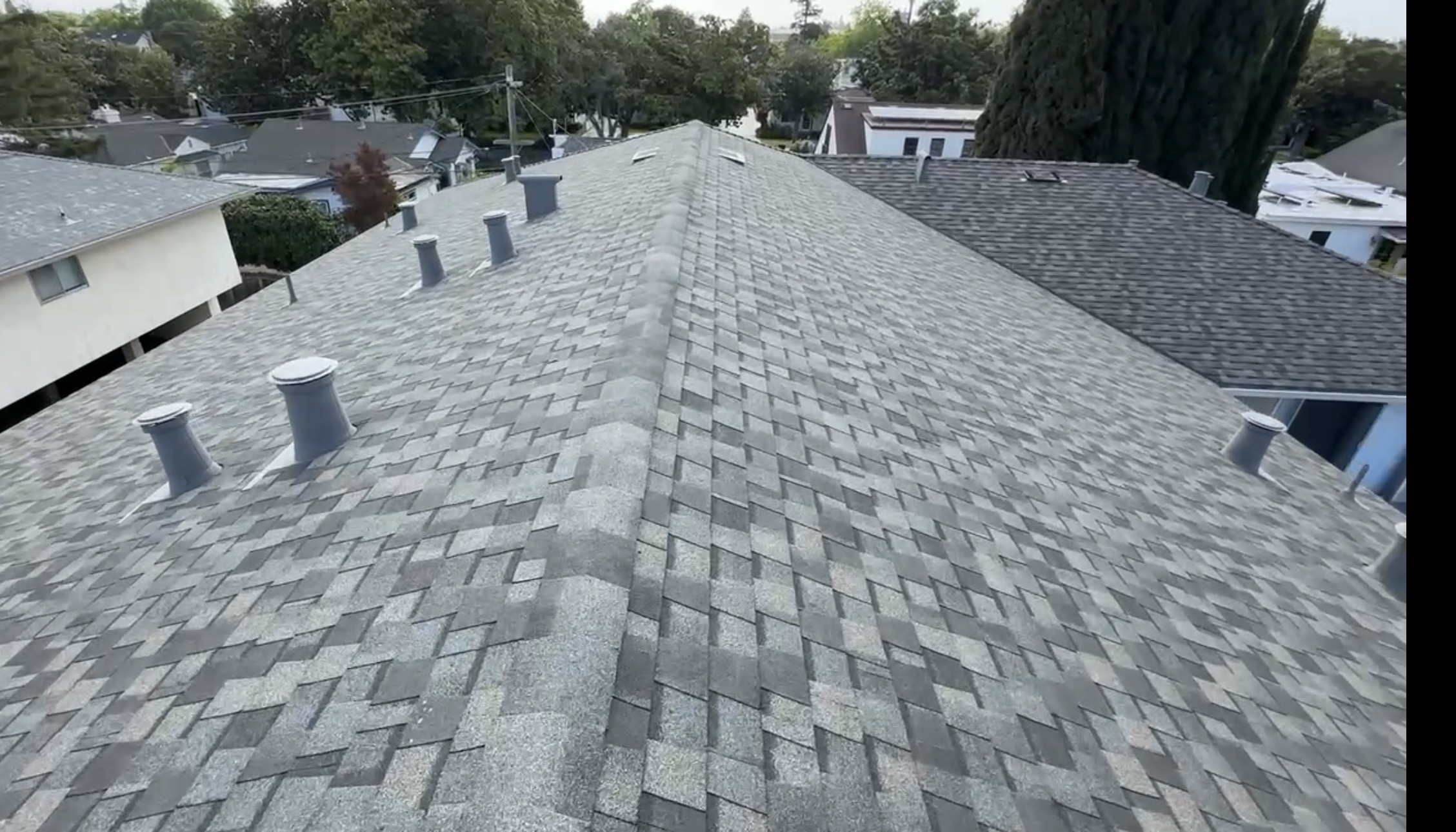
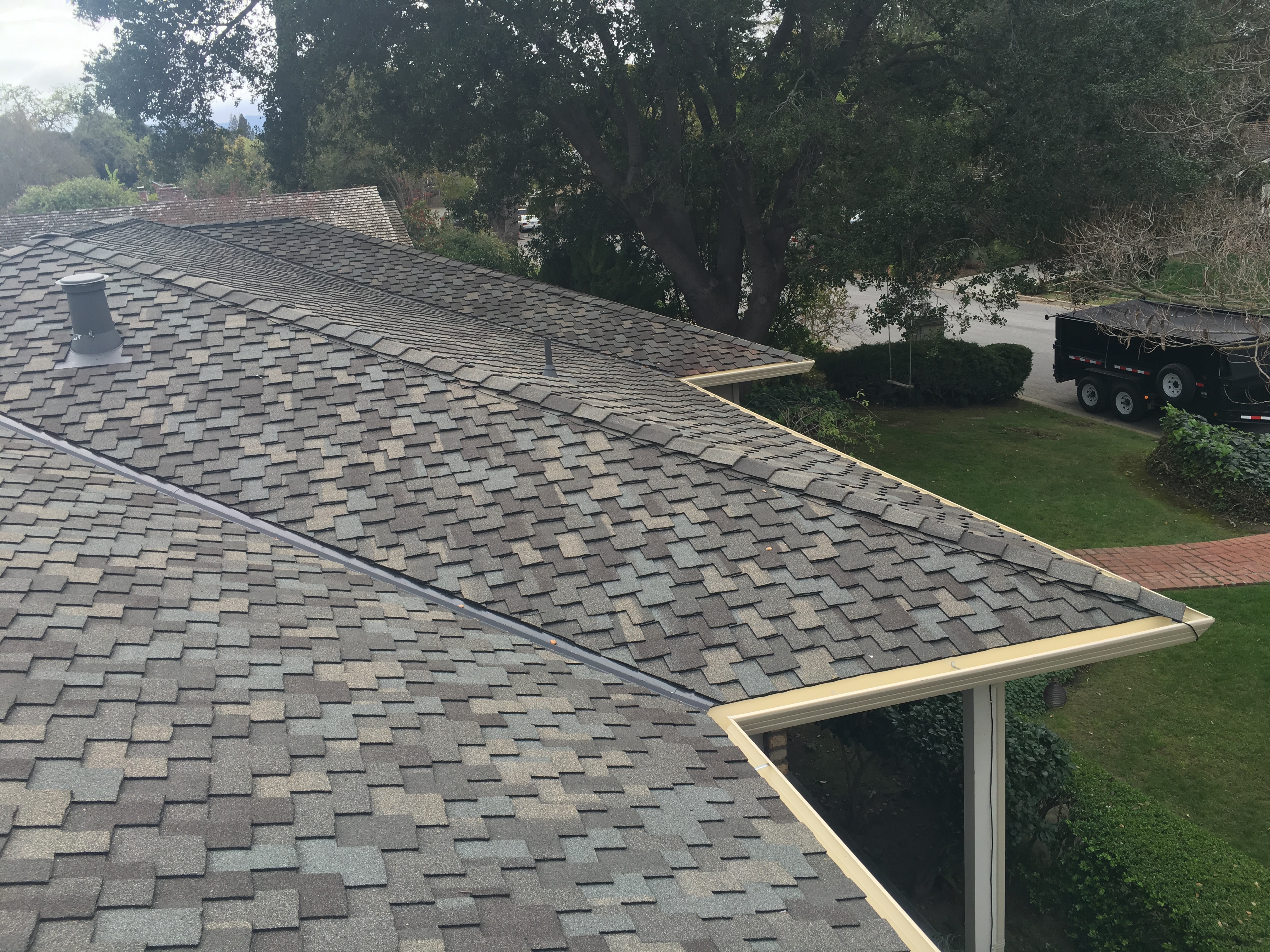
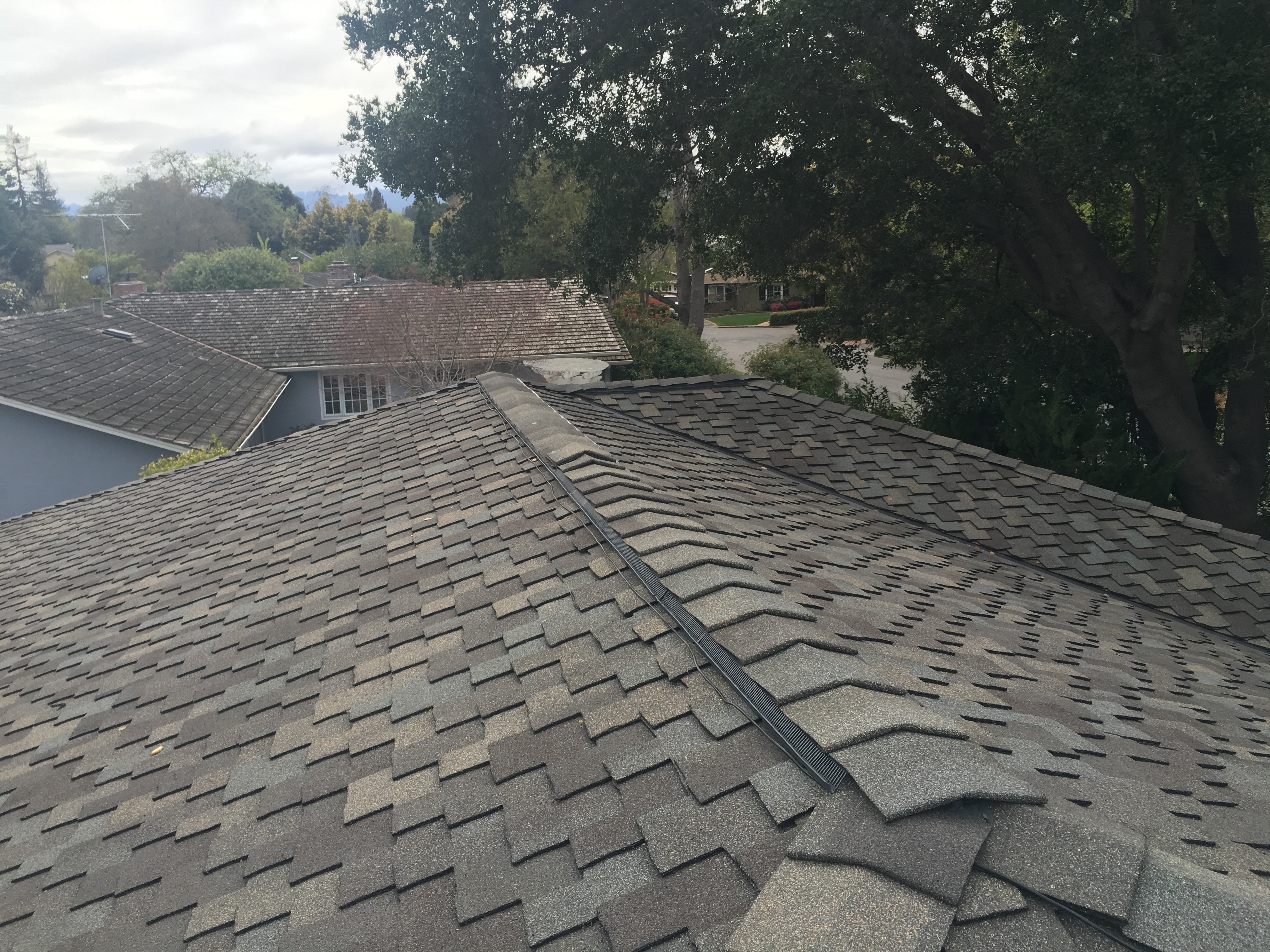
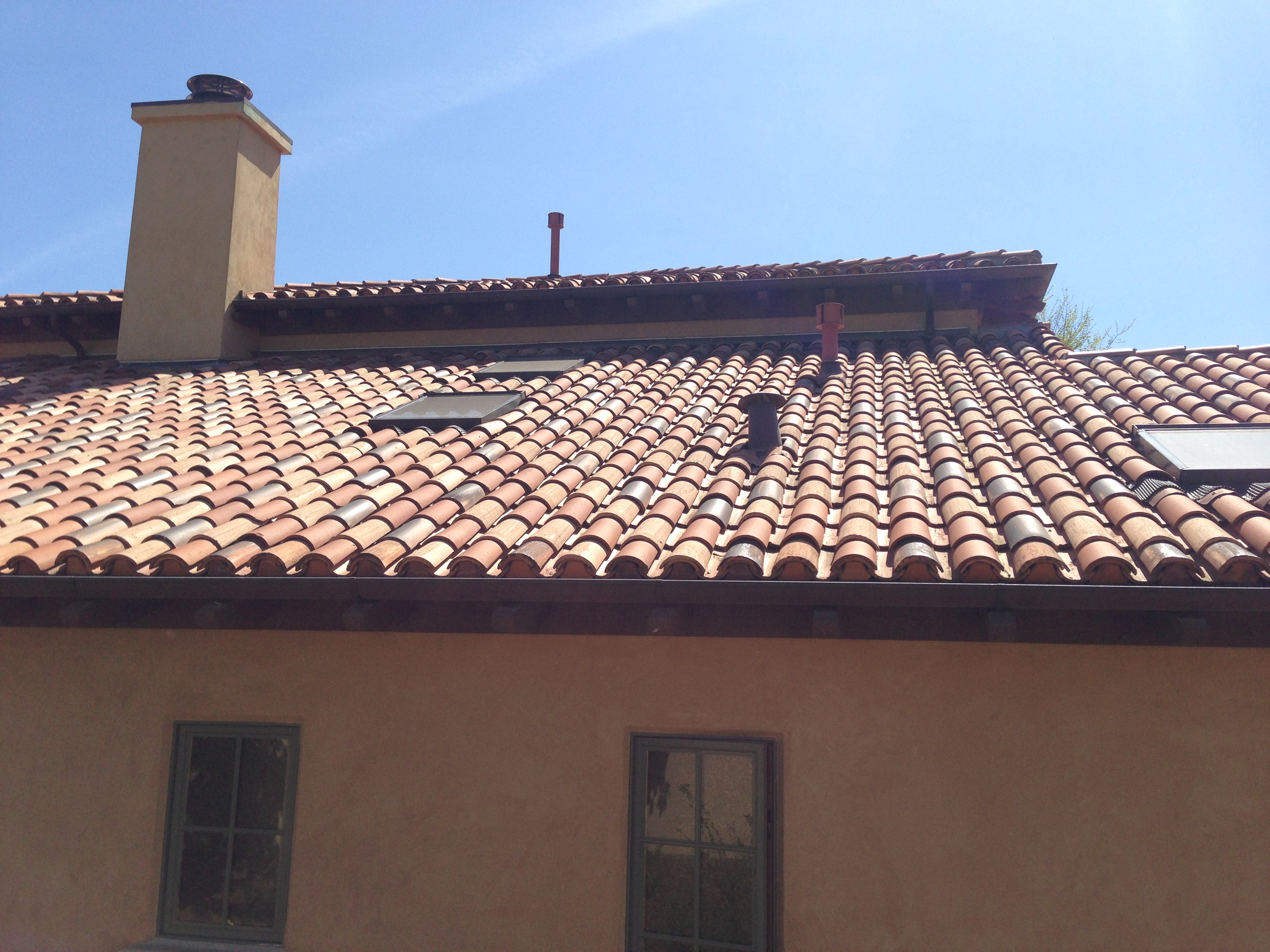
Intersecting roof planes make valleys, penetrations, roof edges, and drainage useful photo-documentation points.A wider roof view records surrounding trees, debris exposure, connected roof planes, and edge conditions.Tile, skylights, chimneys, vents, and eaves should be documented as connected roof-system details.
Morgan Hill Roofing FAQ
Do I need a permit for a reroof in Morgan Hill?
Yes. Morgan Hill publishes a dedicated residential reroof permit process and requires a roof final inspection. Plan the sheathing inspection or compliance form and any required smoke/carbon-monoxide certification before work is covered.
Who should pull a Morgan Hill reroof permit?
For contractor-performed work, the City says the contractor should obtain the permit and provide a current C-39 license, workers' compensation insurance, and a current City business license. An owner-builder can pull the permit but accepts code responsibility and must complete the City's owner acknowledgement before issuance.
Can a Morgan Hill reroof permit be filed online?
A contractor can apply through eTRAKiT for a qualifying residential reroof. Morgan Hill limits that online lane to contractor-applied residential permits. Other permit applications and plans are submitted as PDFs to the Building Division email listed by the City.
Does Morgan Hill require Class A roofing?
Class A roofing is required when the property is in a Fire Hazard Severity Zone. That does not mean every Morgan Hill property has the same status; the parcel should be checked by address and confirmed at permit time.
How do I know if my Morgan Hill home is in a Fire Hazard Severity Zone?
Use the City's 2025 map or the CAL FIRE address lookup, then confirm the result during permit planning. The map includes Moderate, High, and Very High areas, but status is address-specific.
What does Morgan Hill need for the roof final?
The City requires a roof final and says it will not approve that final without either the sheathing compliance form or a completed sheathing inspection. Its reroof page lists smoke/CO certification at final. The currently linked fee schedule, effective December 23, 2024, separately calls for roof and sheathing forms on tile roofs and flags carbon monoxide detectors above $1,000 valuation. Follow the issued permit checklist.
Do smaller roof repairs follow the same path as a reroof?
Not automatically. Repair, alteration, reroof, skylight, structural, solar, and drainage scopes can follow different review paths. Confirm the scope with Morgan Hill Building before assuming a small repair belongs in the residential reroof lane or is permit-exempt.
How does California's cool-roof rule apply in Morgan Hill?
Morgan Hill is in Climate Zone 4 and uses the 2025 Energy Code for permits applied for on or after January 1, 2026. Current CEC instructions say roofing requirements trigger when 50% or more of the roof is replaced. Confirm the roof slope, insulation, exceptions, and selected compliance path at permit.
What roof details are worth documenting in Morgan Hill?
Document valleys, roof-to-wall flashing, skylights, penetrations, eaves, rakes, gutters, tile-to-low-slope transitions, commercial drains, nearby trees, and debris collection. Those photos help distinguish a localized repair from maintenance or broader reroof planning without claiming every Morgan Hill roof fails the same way.
What if the mailing address says Morgan Hill but the property is outside city limits?
Confirm the authority before filing. Properties outside Morgan Hill city limits may be under unincorporated Santa Clara County even when the mailing address says Morgan Hill, so the City's residential reroof process may not apply.
City of Morgan Hill and California agency sources support the permit, code, fire-zone, drainage, and energy notes summarized here. Links and changeable claims were last checked .
Morgan Hill Reroof Fee Schedule and NotesSchedule effective December 23, 2024, with notes for Class A, tile closeout forms, sheathing, and the CO valuation threshold.
Request a Morgan Hill roofing estimate or inspection
Share the address, roof type, leak timing, and whether skylights, gutters, low-slope areas, fire-zone concerns, or permit questions are part of the scope.