Hours
Mon–Fri, 7:30 AM–5:00 PM; Sat, 9:00 AM–1:00 PM
9670 Monterey Rd, Morgan Hill, CA 95037
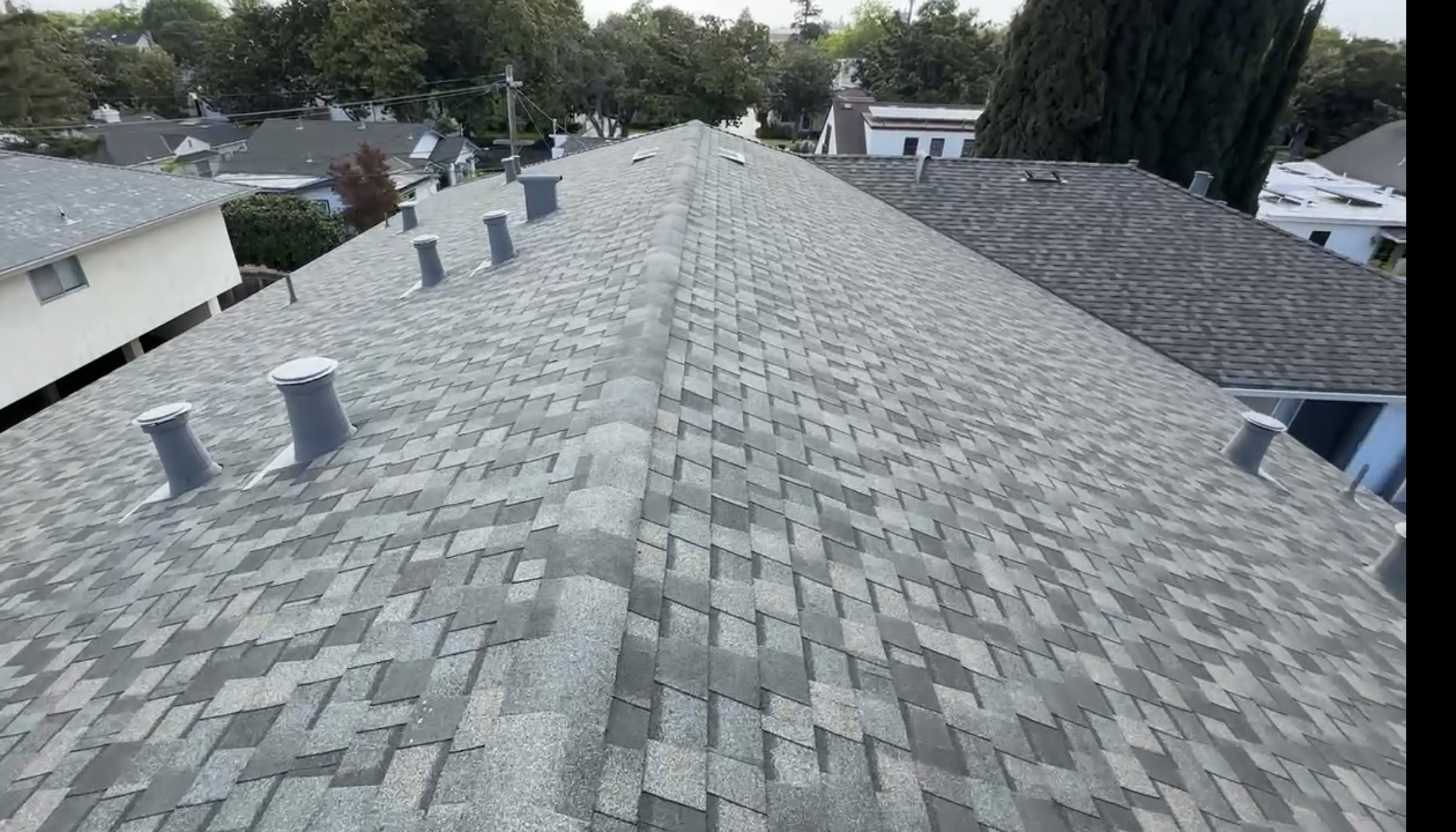
California-ready residential asphalt shingle systems
California-ready asphalt shingle roofs depend on much more than the visible field shingle. We plan the deck, underlayment, starter, flashings, valleys, ventilation, roof-edge drainage, and cool-roof path together so the finished assembly matches the home, slope, and permit conditions.
We look at the roof as an assembly, not just a shingle color or profile. That means checking the deck, slope changes, water-control details, ventilation, and whether the project raises cool-roof or permit-path questions.
Deck condition after tear-off
Slope-specific underlayment and low-slope tie-ins
Flashing, valleys, penetrations, and roof edges
Ventilation, drainage, and cool-roof path when required
We base product-specific language on real project documentation and current manufacturer literature rather than appearance-based guessing.
The visible field shingle matters, but most reroof decisions are hidden inside the assembly. These are the details that usually determine whether a shingle roof performs like a complete system or a collection of parts.
Tear-off exposes rot, delamination, thin sheathing, and older spaced-board conditions that may require new plywood or OSB before the roof has a reliable nailing surface again.
The deck protection layer changes with slope and roof geometry. Standard steep-slope work is not the same as a 2:12 to under 4:12 shingle section, and mixed-slope roofs need section-by-section planning.
Factory starter at the eaves, and often at the rakes, helps control first-course sealing, edge alignment, and perimeter wind behavior.
Architectural shingles fit most residential reroofs, while designer lines add profile depth and visual weight. Either way, the field shingle is only one layer of the roof system.
Matched hip and ridge pieces protect crest lines, finish the roof cleanly, and coordinate with ridge-vent layouts where the attic design supports that approach.
Open metal, closed-cut, and California-cut valleys handle concentrated runoff differently. The right choice depends on roof shape, runoff concentration, and service goals.
Step flashing, headwall or apron flashing, chimney base and counterflashing, kickouts, and crickets are the details that keep direction changes from becoming chronic leak points.
Pipe boots, bath vents, plumbing collars, and skylight transitions should be treated as standard reroof scope, not legacy parts to bury under a new surface.
Balanced intake and exhaust can help control attic heat and moisture when the geometry allows it. Reroofing is also when ventilation shortcomings often become visible.
Nail type, count, placement, and penetration matter. A roof can look clean on day one and still fail early if the fastening pattern does not match the slope, exposure, or target system.
Corrosion-resistant edge metal helps control runoff at eaves and rakes, supports underlayment sequencing, and protects the roof-to-gutter line from recurring edge damage.
Valley discharge, lower roofs, fascia lines, and roof-edge overhangs all affect gutter performance. The shingle roof and the drainage edge should be planned together.
Asphalt shingles stop being generic once the roof design, slope changes, exposure, and existing deck condition are part of the conversation. These are the decisions that usually change the work scope and the long-term result.
| Decision | What changes | When it applies | Why it matters |
|---|---|---|---|
| Tear-off vs overlay | Tear-off exposes deck, flashing, and ventilation conditions; overlay leaves the old roof buried and is limited by layer rules. | Tear-off is the default when long-term performance, deck review, and full-system correction matter more than short-term convenience. | It gives the cleanest path for new flashings, penetration details, edge metal, and structural or sheathing discoveries that an overlay can hide. |
| Solid sheathing vs re-sheeting | Some older homes already have solid sheet decking, while others open up to spaced boards that need new plywood or OSB over the top. | This comes up most often in older housing stock where the visible roof history does not tell the whole deck story. | The nailing surface, deck flatness, and long-term shingle attachment all depend on what is actually under the roof covering. |
| Standard steep-slope vs low-slope shingle sections | A 4:12-and-up shingle field is one condition, a 2:12 to under 4:12 shingle section is another, and below 2:12 usually means transitioning to a different roof covering. | Mixed-slope roofs, porch tie-ins, and lower rear sections are where this decision usually matters most. | Low-slope misuse is one of the easiest ways to make a new shingle roof look finished while leaving a built-in leak risk at the wrong section. |
| Open vs closed-cut vs California-cut valleys | The valley style changes the exposed metal, cut line, inspectability, and how concentrated water moves through the valley. | Roof geometry, runoff concentration, shingle family, and the desired maintenance visibility all influence the choice. | Valleys handle some of the highest water volume on the roof, so layout, cut quality, and nail setbacks matter more than brochure-level descriptions. |
| 4-nail vs 6-nail fastening | The fastening pattern changes the number of nails in the shingle and often pairs with steeper-slope or higher-exposure detailing decisions. | This comes into play when slope, exposure, or the target manufacturer system calls for a stronger fastening pattern. | Fastener count and placement affect uplift resistance, shingle alignment, and whether the roof behaves like the system it was sold as. |
| Ridge vent with intake vs alternate ventilation | Balanced ridge exhaust with intake is one path; box vents or other strategies may make more sense when the attic geometry does not support a ridge-based solution. | Use the roof shape and attic layout to decide, not a one-size-fits-all sales script. | Ventilation performance depends on the whole intake-and-exhaust relationship, and mismatched strategies can work against each other. |
| Code-minimum vs matched-system approach | A roof can be code-compatible without being a full one-brand package, but the warranty and accessory coordination story is usually stronger when the system stays matched. | This matters when the homeowner wants better system alignment or when a warranty path depends on matched components. | Starter, ridge, deck protection, and other accessories are where roofs either behave like a coordinated system or drift toward patchwork logic. |
| Full flashing replacement vs selective reuse | Full replacement updates sidewalls, chimneys, valleys, skylights, vents, and roof edges; selective reuse keeps aging metal in place and works around it. | Full replacement should be the default on a residential reroof unless a very specific detail is verified as reusable and compatible. | This is where many leak histories begin. New shingles over tired flashing often produces a roof that is cosmetically new but technically unfinished. |
Cool-roof language should stay precise on asphalt-shingle reroofs. Not every home, city, slope, or permit year follows the same path, and product marketing does not replace code review.
Not every asphalt-shingle reroof in every city follows the same cool-roof path. Climate zone, roof type, reroof scope, and the permit year all affect the answer.
California's cool-roof pathways and shingle installation rules do not treat every slope the same. Porches, additions, shed sections, and lower tie-ins often need separate review from the main roof plane.
Product literature is useful, but it does not replace the active California code cycle, local jurisdiction review, or current product eligibility when those are part of the permit path.
The shingle category may stay the same, but the recommendation can shift based on heat load, moisture exposure, runoff concentration, and how the roof mixes steep and lower-slope sections.
This is where cool-roof relevance and attic heat deserve the most attention. On qualifying reroofs, the code path, the actual roof geometry, and the selected shingle family need to stay aligned instead of being treated as an afterthought.
The conversation often shifts toward valleys, lower roof tie-ins, penetrations, moisture control, and roof-edge drainage. Cool-roof options still matter, but they usually are not the whole story on steep-slope shingles.
Bay exposure puts more weight on flashing execution, valley handling, corrosion-resistant metal details, moisture management, and runoff control at fascia and gutter lines.
These are practical California-available families, not a brand ranking. The useful comparison is the mainstream architectural lane, the designer path, cool-roof variants where applicable, and how matched accessories can help keep the roof system coordinated.
If one or two of these conditions are localized, a targeted roof repair may make sense. When they show up across the roof assembly, the leak history often points toward broader roof replacement planning.
Brittle collars and cracked boots often fail before the field shingles do, especially on older replacements with partial accessory reuse.
Concentrated runoff exposes weak cut lines, bad nail placement, and valley designs that do not match the roof's actual water volume.
New shingles over old sidewall, chimney, skylight, or apron flashing can leave the roof looking finished while the leak path stays in place.
Improper step flashing, cladding conflicts, and rushed wall tie-ins are repeat offenders on shingle reroofs that were scoped too narrowly.
Water that should be kicked into the gutter can dump into siding or trim when the termination detail is missing or poorly executed.
Roof edges fail early when the overhang, metal sequencing, or gutter relationship leaves water to run behind the gutter line.
Too much exhaust, not enough intake, or mixed ventilation strategies can add heat and moisture stress that the shingles get blamed for later.
Trapped moisture at edges, eaves, or lower transitions often shows up only after tear-off, which is why system planning has to go beyond surface appearance.
Valley discharge, undersized gutters, and clog-prone outlets can push water back onto the edge details and rot the perimeter over time.
Porches, transitions, and rear additions are common places where shingles get used where a different roof covering or low-slope method should have been specified.
When valleys, boots, flashings, and underlayments have all been corrected at different times, the roof can become an inconsistent assembly that is harder to trust.
It is not just the field shingle. A complete system includes deck condition, slope-appropriate underlayment, starter, field shingles, hip and ridge accessories, valleys, flashings, penetrations, ventilation, fasteners, drip edge, and roof-edge drainage details.
Not below 2:12. Between 2:12 and under 4:12, shingles need a low-slope installation method with additional deck protection, so mixed-slope roofs should be reviewed section by section.
Cool-roof review can matter when climate zone, roof type, permit year, and reroof scope trigger it. We verify the current code path and product eligibility instead of assuming every asphalt-shingle project has the same requirement.
Yes. San Jose and Sacramento sit in climate zones where cool-roof review is more central on qualifying reroofs, while Bay-side CZ3 cities often focus more on moisture control, flashing execution, and drainage details.
That should be the default plan on a full replacement. Reroofing is the best time to replace edge metal, penetration flashings, pipe boots, and wall transitions instead of burying aging components under new shingles.
There is no single best valley for every roof. Open metal, closed-cut, and California-cut valleys all have valid use cases depending on roof geometry, shingle family, runoff concentration, and workmanship goals.
For a system-focused reroof, usually yes. Tear-off exposes the deck, old flashings, ventilation conditions, and low-slope transitions that matter most when the goal is long-term performance rather than a cosmetic recover.
Sometimes. When attic ventilation is deficient or the new assembly changes airflow expectations, ventilation correction can become part of the reroof scope.
They matter most for system coordination and manufacturer warranty strength. Code does not require one-brand bundles, but matched starter, ridge, deck protection, and related accessories can make the assembly more coherent.
They can be, especially when the tested assembly is Class A. The broader wildfire story still includes ember control at roof edges, gutters, vents, skylights, and roof surfaces that collect debris.
Usually yes. Gutters, skylights, and sun tunnels all connect directly to roof-edge drainage and flashing performance, so reroofing is the cleanest time to coordinate those details.
Share the roof type, leak history, slope changes, and any gutter or skylight concerns so we can recommend the right replacement path and verify cool-roof questions when they apply.